Fertility is not a single biological event. It is shaped by hormones, blood circulation, immune function, and the nervous system. Chronic stress, sedentary habits, and poor sleep can all disrupt the hormonal signalling that governs ovulation and sperm production.
Yoga does not treat infertility. It is not a substitute for medical evaluation if you have been trying to conceive for an extended period. But as a supportive lifestyle practice, the evidence suggests yoga can improve several biological conditions that matter for reproductive health — particularly stress hormone regulation, pelvic blood circulation, and nervous system balance.
📌 Important: This guide is for informational purposes only. If you have a diagnosed condition — PCOS, endometriosis, blocked tubes, low ovarian reserve, or male factor infertility — please consult a fertility specialist. Yoga can complement medical treatment but cannot replace it.
How Yoga Supports Fertility
The connection between yoga and reproductive health is primarily understood through four biological pathways:
Reduces Cortisol — the Stress Hormone
Chronic stress raises cortisol. High cortisol suppresses GnRH production in the hypothalamus. GnRH triggers LH and FSH release — the hormones that drive ovulation and sperm production. By activating the parasympathetic nervous system, yoga reduces cortisol and protects the HPO hormonal axis.
Improves Pelvic Blood Circulation
Many yoga poses — particularly hip-opening and inverted postures — increase blood flow to the pelvic region. Improved uterine and ovarian circulation supports endometrial receptivity. A well-vascularised lining improves implantation conditions. It may also support follicular development.
Supports Hormonal Balance
Beyond cortisol, yoga positively influences other hormonal systems. It can reduce elevated androgens in PCOS. It supports thyroid function through specific poses. And it improves insulin sensitivity — a key factor in PCOS-related anovulation.
Improves Psychological Well-Being
The emotional toll of trying to conceive is significant. Anxiety and depression during fertility treatment are linked to lower treatment adherence. In some research, they are also linked to lower clinical pregnancy rates. Yoga's documented benefits for anxiety and depression are independent of its physiological effects. Both matter for couples navigating infertility.
Best Yoga Poses for Fertility
The following five poses are most frequently recommended for reproductive health. Each is chosen for its anatomical relevance, pelvic circulation effects, or nervous system impact. Each pose includes the biological mechanism that connects it to reproductive health.
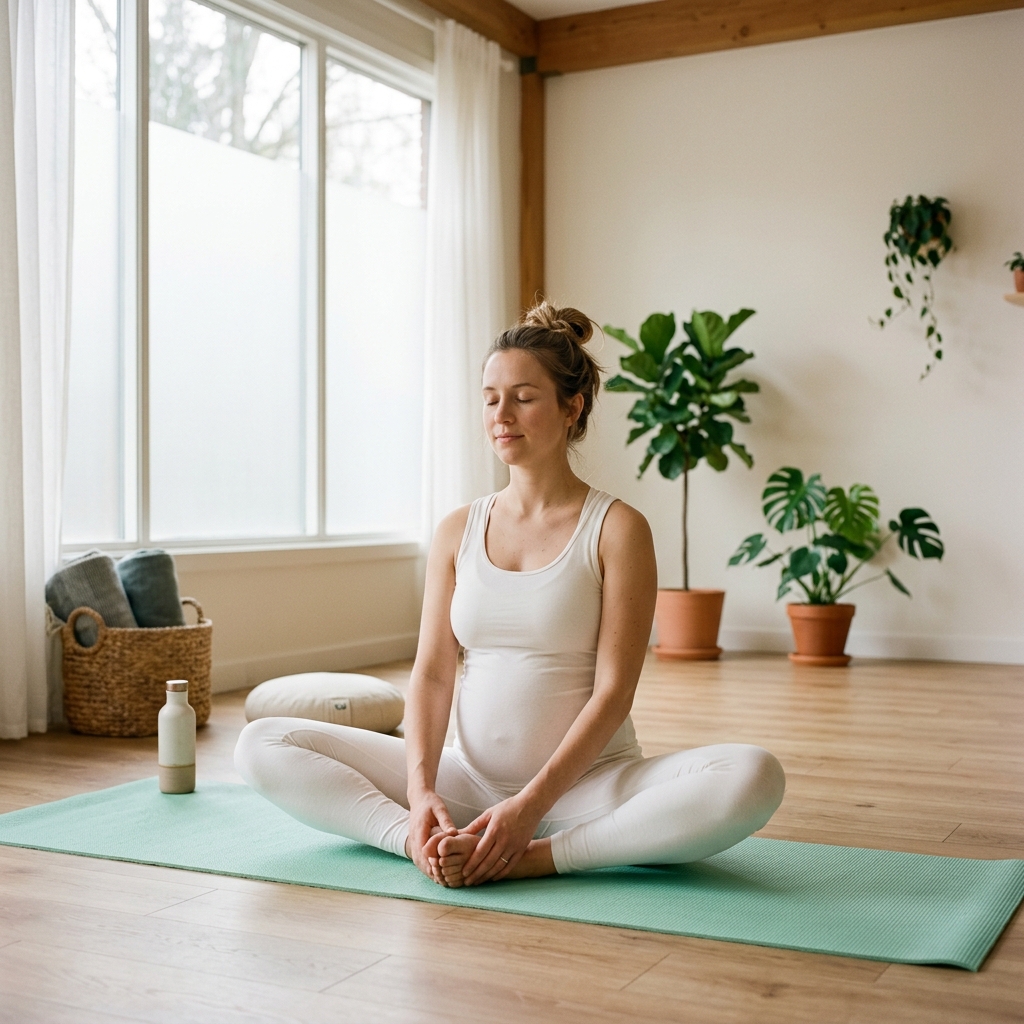
Opens the inner groins and hip flexors; encourages blood flow to pelvic organs
Sit on the floor, bring the soles of your feet together, and let your knees fall outward. Hold your feet, lengthen your spine, and breathe steadily. Hold for 1–3 minutes.
Stretches the adductor muscles and pelvic floor, releasing tension that can restrict blood supply to the uterus and ovaries. Often practised in the follicular phase to prepare the reproductive organs.
Avoid if you have a groin or inner knee injury. Use a folded blanket under the hips if the lower back rounds.
Engages glutes and spine; improves blood flow to pelvic floor and reproductive organs
Lie on your back with knees bent, feet flat on the floor. Press into the feet, lift the hips, and interlace the hands beneath the pelvis. Hold for 30–60 seconds, breathing steadily.
Gently strengthens the pelvic floor muscles and improves circulation to the uterus and ovaries. It also activates the parasympathetic nervous system. This reduces cortisol levels that can suppress the pituitary release of LH and FSH.
Avoid in later stages of pregnancy or immediately after egg retrieval. Do not force the hips too high or hold if you feel neck strain.
Reverses gravity on blood flow; drains fluid from legs back toward the pelvis and abdomen
Sit sideways next to a wall, then swing your legs up as you lie on your back. The hips can be against the wall or a short distance away. Rest with arms by your sides. Hold for 5–15 minutes.
One of the most frequently recommended restorative poses for fertility. By reversing venous blood flow, it may improve circulation to the pelvic region. It also activates the parasympathetic nervous system — reducing the physiological stress response and its impact on the HPO axis.
Avoid during menstruation (some teachers advise against strong inversions during bleeding). Avoid if you have glaucoma, uncontrolled hypertension, or are in the stimulation phase of IVF.
Opens the chest and abdomen; stimulates the adrenal and thyroid glands; activates the sympathetic-to-parasympathetic transition
Lie face down with hands beneath the shoulders. Inhale and gently lift the chest, using back muscles more than arm pressure. Hold for 15–30 seconds. Lower on the exhale.
Stimulates the abdominal organs and adrenal glands. It may help reduce sustained cortisol elevation — a known disruptor of the hypothalamic signals that trigger ovulation. Also stretches the ovarian ligaments gently.
Avoid in pregnancy, after abdominal surgery, or if you have disc herniation. Keep the cobra low (elbows slightly bent) rather than forcing a full backbend.
Deep rest posture; activates the parasympathetic nervous system; relieves lower back tension
Kneel on the floor, sink your hips back toward your heels, and extend your arms forward (or rest them alongside your body). Rest your forehead on the mat. Breathe slowly and deeply. Hold for 2–5 minutes.
The most accessible restorative pose for fertility support. It activates the "rest and digest" nervous system response. This counters the cortisol-driven stress state that suppresses hypothalamic GnRH release — the hormone that kicks off the entire ovarian stimulation cascade.
Modify with a pillow beneath the hips if the knees are uncomfortable. Wide-kneed variation (Supta Balasana) is more comfortable for many women.
When to Practice Yoga During Your Cycle
Adapting your yoga practice to your menstrual cycle phase is a principle from both traditional yoga and reproductive physiology. Each phase involves a different hormonal state. Matching your practice to that state helps you avoid over-exertion at sensitive points in the cycle.
Who Should Be Careful
Yoga is broadly safe for most people — but certain situations require specific modifications or medical guidance before continuing or starting a practice.
Women Undergoing IVF or Fertility Treatment
- During ovarian stimulation, the ovaries enlarge significantly — sometimes to the size of oranges. Strong inversions, deep twists, and intense core compression are contra-indicated. They carry a risk of ovarian torsion (twisting).
- After egg retrieval, the body needs rest. Avoid all strenuous yoga for at least 48–72 hours post-retrieval.
- During the two-week wait after embryo transfer, restorative yoga (Balasana, Viparita Karani, seated breathing) is generally considered acceptable — but always confirm with your fertility specialist.
- Avoid hot yoga entirely during all phases of IVF — heat can negatively affect embryo viability.
Women with High-Risk Pregnancy Factors
- If you have a history of recurrent pregnancy loss (RPL), certain yoga poses and intense exercise may be advised against in the early pregnancy period.
- Placenta praevia, cervical incompetence, and twin pregnancies require specific obstetric guidance on physical activity.
- If you have confirmed a pregnancy, switch to a dedicated prenatal yoga programme rather than continuing a general fertility yoga practice.
Medical Conditions Requiring Guidance
- Endometriosis: Some poses (particularly those increasing pelvic pressure) may aggravate pain during menstruation. Restorative postures are generally better tolerated. Work with a yoga teacher experienced in endometriosis.
- Uterine fibroids or polyps: Discuss with your gynaecologist before starting any physical practice.
- Glaucoma or uncontrolled hypertension: Inversions (including Viparita Karani) are contra-indicated.
- Spinal disc conditions: Bhujangasana and other backbends require modification — seek guidance from a physiotherapist-informed yoga teacher.
Lifestyle Factors to Practise Alongside Yoga
Yoga is most effective as a fertility-supportive practice when it is part of a broader lifestyle approach. The following factors work in synergy with yoga — each addressing different aspects of the biological environment that influences conception.
Nutrition
A Mediterranean-style diet is the most evidence-supported dietary pattern for fertility in both men and women. It is rich in folate, omega-3 fatty acids, antioxidants, and whole grains. Start folic acid (400mcg/day) before conception attempts. Avoid ultra-processed foods, excessive sugar, and trans fats — all of which adversely affect egg and sperm quality.
Fertility Diet Guide →Sleep
Sleep deprivation elevates cortisol, disrupts melatonin, and impairs glucose metabolism. Melatonin plays a direct role in follicular development and egg quality. Aim for 7–8 hours of consistent sleep per night. Evening yoga — particularly Balasana and Viparita Karani — supports better sleep by activating the parasympathetic nervous system before bed.
Stress Management
Beyond yoga, evidence-based stress reduction includes mindfulness meditation, fertility counselling, and peer support groups. MBSR programmes show measurable cortisol reduction. The combination of yoga, mindfulness, and social support is more effective than any single approach. If anxiety significantly affects your daily life, consider referral to a psychologist who specialises in fertility support.
Moderate Exercise
Moderate aerobic exercise (150 minutes per week) improves insulin sensitivity, supports healthy BMI, and reduces systemic inflammation — all factors that support reproductive health. Avoid excessive endurance exercise such as long-distance running or intensive training. These can suppress ovulation through the hypothalamic pathway. Yoga complements — but does not fully replace — structured aerobic activity.
When Yoga Is Not Enough — When to See a Fertility Specialist
Yoga is a supportive practice. There are clear situations where it is not enough — and where medical evaluation is essential, regardless of how consistent your yoga practice has been.
See a fertility specialist if:
- You are under 35 and have been trying to conceive for 12+ months without success
- You are 35–37 and have been trying for 6+ months
- You are 38 or older and have been trying for 3+ months
- You have irregular or absent periods — these may indicate anovulation
- You have a known diagnosis of PCOS, endometriosis, fibroids, or thyroid disorder
- Your partner has a known semen analysis abnormality
- You have had two or more miscarriages (recurrent pregnancy loss)
- You have previously undergone pelvic surgery or have a history of pelvic inflammatory disease (PID)
Frequently Asked Questions About Yoga for Fertility
Yoga is not a fertility treatment. But it may support reproductive health indirectly. Evidence suggests it reduces cortisol — which can suppress ovulation. It may improve pelvic circulation and calm the hormonal axis. It works best as part of a broader healthy lifestyle, not as a standalone intervention.
Baddha Konasana (Butterfly Pose) and Viparita Karani (Legs-Up-the-Wall) are commonly recommended for pelvic and uterine health. Both encourage blood flow to the pelvic region, release tension in the inner thigh and hip muscles, and are gentle enough for most women. Always practice under guidance if you have a known uterine condition such as fibroids, polyps, or endometriosis.
Yoga may help manage PCOS symptoms indirectly. Research has shown that regular practice can reduce androgen levels (the male hormones elevated in PCOS), lower stress-related insulin resistance, support weight management, and improve cycle regularity. These are meaningful benefits — but yoga does not replace medical treatment for PCOS. It works best alongside dietary changes and, where needed, prescribed medication.
Gentle, restorative yoga is generally considered safe during IVF, but specific phases require caution. During ovarian stimulation, the ovaries enlarge and strong inversions, twists, or intense core work may be uncomfortable or carry a small risk. After egg retrieval and during the two-week wait, very gentle restorative poses (Balasana, Viparita Karani) are commonly practised. Always consult your fertility specialist before continuing yoga during IVF.
There is no established frequency specifically for fertility. For general stress reduction and reproductive health support, 3–4 sessions per week of 30–45 minutes is a reasonable starting point. Consistency matters more than duration. Gentle, non-intense styles — such as Hatha, Yin, or Restorative yoga — are better suited than high-intensity styles for women trying to conceive.
Yoga cannot correct hormonal imbalances caused by medical conditions such as thyroid disorders, hyperprolactinemia, or premature ovarian insufficiency. However, by reducing chronic stress, yoga can help the body maintain a more stable hormonal environment. Medical diagnosis and treatment remain the primary approach for clinical hormonal disorders.
Hatha yoga, Yin yoga, and Restorative yoga are the most appropriate styles for women trying to conceive. These styles prioritise slow, held poses that encourage relaxation, pelvic opening, and nervous system calming. High-intensity styles such as Hot yoga (Bikram) or Power yoga are not recommended during the luteal phase or during fertility treatment cycles.
Yes — yoga may support male fertility through stress reduction. Chronic stress negatively affects sperm parameters. Yoga also promotes lifestyle improvements such as better sleep and reduced alcohol use. Poses that relieve lower back tension (Supta Baddha Konasana, Upavishtha Konasana) may also relieve pelvic congestion. High-heat environments such as hot yoga are best avoided — elevated scrotal temperature can temporarily reduce sperm production.